

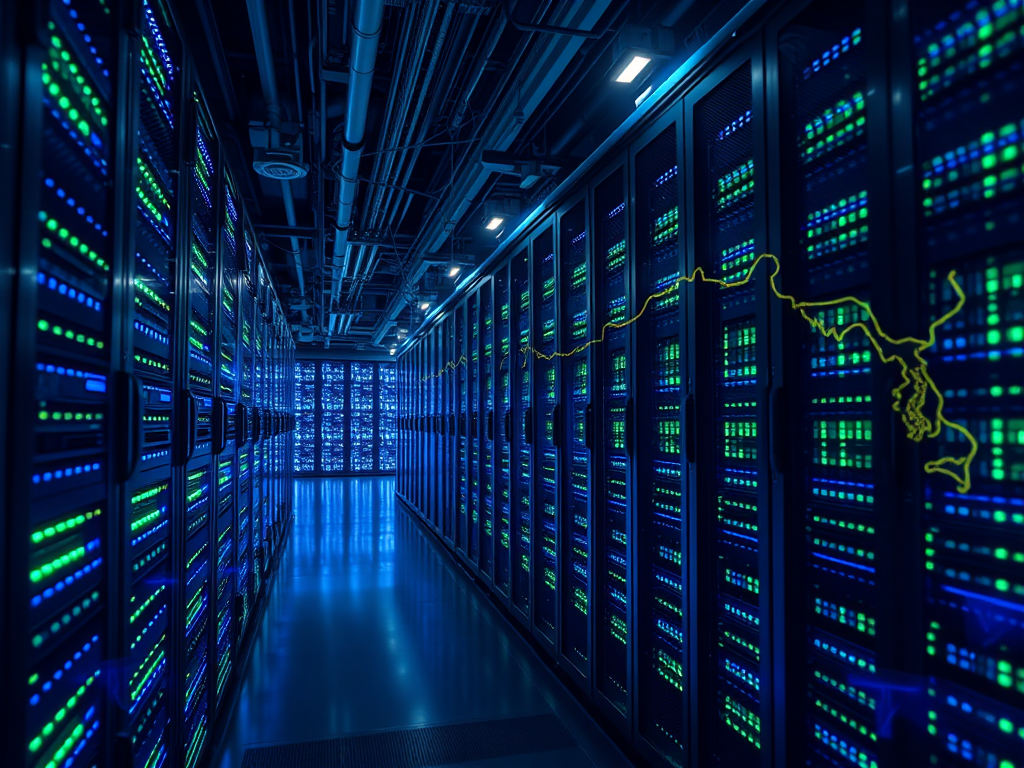
Introduction: When Digital Dreams Collide with Physical Limits
Artificial intelligence has become the new industrial revolution engine—driving innovation in finance, medicine, logistics, entertainment, and more. But beneath the sleek narrative of “the cloud” and “intelligent infrastructure” lies a far more concrete reality: a massive surge in electricity demand, concentrated in AI-ready data centers that can draw as much power as medium-sized cities.
As these energy-hungry facilities proliferate, they are running into a hard constraint: the power grid was not designed to deliver tens of gigawatts of new demand in just a few years, and certainly not in a handful of localities. Interconnection queues are ballooning, transmission build-out is slow, and regulators are struggling to keep up. The result is a growing trend: some data centers are turning to on-site generation—gas-fired plants, backup diesel, fuel cells, renewables-plus-battery microgrids, and even repowered coal or oil plants—to circumvent grid delays and secure reliable supply.
This dynamic is powerful enough that it is reshaping the fate of older power plants. Assets once scheduled for retirement are being reconsidered or revived because of lucrative new contracts with data center customers, particularly in the United States and other AI hotspots.13 At the same time, communities and activists are increasingly pushing back, wary that AI’s rise could lock in decades of additional fossil fuel use and delay climate goals.
This article examines the evolving relationship between AI data centers and the power grid. It traces the historical context of data center demand, explains why interconnection queues have become a bottleneck, explores the move toward on-site power, illustrates real-world case studies, and analyzes future implications for energy systems, climate policy, and infrastructure planning. The goal is to offer a comprehensive, evidence-based, and forward-looking view of how this collision between digital growth and physical infrastructure might be navigated—and what is at stake if we get it wrong.
1. Historical Context: From Modest Server Rooms to Gigawatt Hubs
1.1 Early Data Centers and Modest Grid Footprints
The first generations of data centers in the 1980s and 1990s were relatively modest in scale. Most were corporate server rooms or colocation facilities with power needs in the hundreds of kilowatts to a few megawatts—comparable to a large commercial building. Grid connections were rarely a headline issue. Local distribution networks could usually accommodate such loads through incremental upgrades.
Key features of this era:
- Limited specialization: Data centers were often embedded in corporate campuses or telecommunications facilities.
- Power intensity manageable: Although early computing equipment was inefficient by today’s standards, absolute load was small.
- Grid planning assumptions: Utilities treated data centers as “large customers,” but not fundamentally transformative loads.
Transmission constraints and interconnection queues existed, but they were mostly about new power plants (especially wind and solar) rather than load. Data centers were passengers, not drivers, in the grid planning story.
1.2 The Rise of Hyperscale and Cloud Computing
The 2000s and 2010s brought the rise of cloud computing and hyperscale data centers—massive facilities built and operated by technology giants to host search, social media, streaming, and cloud services. Individual campuses began to reach hundreds of megawatts, often clustered in specific regions with favorable conditions (cheap land, cool climate, tax incentives, and good connectivity).
Important shifts during this phase:
- Hyperscale campuses: Amazon, Microsoft, Google, Meta, and others built clusters of facilities, sometimes totaling over 1 gigawatt of capacity in a single region.
- Power usage effectiveness (PUE) improved, reducing overhead energy for cooling and auxiliary systems, but overall load still soared because of scale.
- Data center hubs emerged in places like Northern Virginia (US), Dublin (Ireland), and parts of Scandinavia, reshaping regional load profiles.
Even then, the overall pressure on national grids was significant but manageable. Many utilities welcomed data centers as stable, creditworthy customers. Some hyperscalers signed long-term power purchase agreements (PPAs) for renewables, accelerating wind and solar deployment.
Interconnection queues remained a bigger problem for new generation than for load. But the seeds of congestion were planted: adding dozens of large loads in the same transmission-constrained areas was bound to create local stress.
1.3 From Cloud to AI: A Step-Change in Density and Demand
The late 2010s and early 2020s saw another inflection point: the rise of AI, particularly large-scale training and inference using specialized hardware like GPUs and AI accelerators. AI workloads are far more power-dense than traditional web or enterprise workloads.
Key characteristics of AI-driven data centers:
- High rack densities: AI racks can draw 30–80 kW each, compared with perhaps 5–10 kW in many traditional data centers, requiring advanced cooling and robust electrical infrastructure.
- Massive training runs: Training frontier models can consume tens to hundreds of megawatt-hours over relatively short periods.
- Continuous inference: Once models are deployed globally, inference workloads add a persistent baseline load.
The upshot is that AI-ready data centers often require:
- Hundreds of megawatts per campus.
- Rapid expansion timelines driven by competitive pressure.
- Locations near fiber routes and sometimes near existing data center hubs—precisely where the grid is already tight.
At this point, a quiet structural reality surfaces: power grids and transmission systems move slowly, with timelines measured in 5–15 years for major upgrades, whereas AI and digital service demand can ramp in 12–36 months. The mismatch between digital acceleration and physical infrastructure inertia is at the core of today’s tension.
2. Grid Connection Queues: Why Data Centers Are Getting Stuck
2.1 The Basics: What Is an Interconnection Queue?
To connect a large new load—or a new power plant—to the transmission system, developers must go through an interconnection process. This includes studies to ensure that:
- The existing grid can handle the additional power without overloading lines, transformers, or causing voltage and stability problems.
- If not, what upgrades—new lines, substations, reactive power equipment—are needed, and who pays for them.
Projects enter an interconnection queue, where they await studies and approvals. Historically, queues were manageable and primarily filled with generation projects. Today, in many markets, they are congested with both generation (especially wind, solar, storage) and large new loads like data centers, hydrogen plants, and EV manufacturing.
2.2 Why Queues Have Become So Long
Several factors converged in the 2020s to create long interconnection backlogs:
- Explosion of renewable projects competing for limited transmission capacity.
- Aging grid infrastructure and underinvestment in new lines over decades.
- Regulatory complexity and lengthy permitting processes, especially for high-voltage lines.
- Shift to cluster studies and reforms that have taken time to implement.
- New mega-loads like AI data centers compounding the strain.
Analyses by industry groups and regulators show that in some US regions, interconnection queues collectively represent hundreds of gigawatts of proposed projects, with many facing wait times of 5–10 years for full connection.4 Similar issues appear in parts of Europe and Asia, particularly where data center clusters and renewable deployment are both aggressive.
2.3 Data Centers’ Specific Challenges with Grid Hookups
For AI data centers, the interconnection challenge has some unique characteristics:
- Concentrated, inflexible load: A single site might require 300–600 MW of firm capacity; moving the site is not trivial due to fiber, workforce, and ecosystem constraints.
- Tight timelines: Cloud and AI providers often need capacity online in 2–4 years to meet product roadmaps and market demand, which is faster than typical grid build timelines.
- Location overlap with existing hubs: Many AI expansions are happening in places where the grid is already heavily utilized.
This combination means that when utilities and system operators say, “You can have 50 MW in 2027 and another 150 MW in 2032,” AI players may see that as commercially unacceptable. That is the moment when on-site generation becomes attractive—even if, in pure system terms, it is less efficient than grid-supplied power.
2.4 Policy Response: Efforts to Accelerate Interconnection
Regulators are increasingly aware of the problem. In the US, for example:
- Federal energy agencies have directed regulators to streamline interconnection processes and consider reforms to better accommodate data centers as critical infrastructure.5
- Regional transmission organizations (RTOs) and independent system operators (ISOs) are overhauling their study procedures, moving from project-by-project analysis to cluster-based studies to clear backlogs faster.4
But these reforms, while important, cannot instantly create new transmission lines or generation. So, in the near term, many developers still face multi-year waits for full-service hookups. This is the pressure cooker that leads directly to on-site generation and, in some cases, altered retirement plans for power plants.
3. On-Site Generation: The New Power Strategy for AI Campuses
3.1 What “On-Site Power” Means in the Data Center Context
On-site generation for data centers spans a spectrum:
- Traditional backup systems: Diesel generators sized for emergency use, not continuous operation.
- Behind-the-meter gas plants: Dedicated gas turbines or reciprocating engines providing a large share of the data center’s baseload demand.
- Fuel cells: Often powered by natural gas or hydrogen, used for cleaner, efficient on-site power.
- Renewables-plus-storage microgrids: Solar, wind (if space allows), batteries, and sometimes bioenergy to supply a portion or majority of load.
- Hybrid arrangements: Combining grid supply with on-site plants to manage capacity constraints and reliability.
Historically, only backup systems were standard; continuous on-site generation was rare. Today, some AI data center developers are designing sites with full-fledged on-site plants in mind from the start.
3.2 Drivers Behind the Shift to On-Site Generation
Several interlocking drivers explain the move:
- Grid delays and uncertainty
- Long and uncertain interconnection timelines make it hard to plan multi-billion-dollar AI campuses around future grid capacity.
- On-site plants provide a path to decouple data center growth from grid constraints—at least partially.
- Reliability and resiliency
- AI training jobs and mission-critical cloud services require extremely high uptime.
- On-site generation can act as a reliability layer, reducing exposure to regional grid events.
- Economic incentives
- In markets with high wholesale prices or capacity shortages, contracting with or owning an on-site plant can be financially attractive.
- Some developers secure favorable fuel contracts or exploit waste heat opportunities.
- Regulatory arbitrage
- In some jurisdictions, behind-the-meter generation is subject to different (often lighter) regulatory requirements or tariffs.
- Developers may find it easier to permit a gas plant tied to a single customer than to push for regional transmission upgrades that face broader opposition.
- Strategic control
- Technology companies increasingly want more control over their energy supply, both for branding (e.g., “green AI”) and for risk management.
3.3 Technologies in Play: Fossil, Renewable, and Hybrid Solutions
Fossil-based on-site power
- Gas turbines and engines are currently the most common form of large-scale on-site generation for data centers. They offer:
- High capacity factors.
- Flexible operation to follow load.
- Integration with combined heat and power (CHP) systems to improve efficiency.
- However, they lock in carbon emissions and can face strong local opposition.
Fuel cells
- Fuel cells (solid oxide, PEM, etc.) can provide low-emission, high-reliability power, especially when fueled by low-carbon hydrogen.
- Today, most stationary fuel cells use natural gas, with potential for later hydrogen blending.
- Their capital cost remains high, but some technology companies and utilities are piloting them at scale as a potential long-term solution for 24/7 clean power.
Renewables and storage
- On-site solar paired with batteries is increasingly common but often constrained by land availability. A few hundred megawatts of AI load would require enormous solar fields if served solely on-site.
- Batteries can provide peak shaving, backup, and grid services but rarely cover continuous multi-hundred-megawatt loads alone.
- Some developers consider co-locating data centers near large off-site renewable plants with dedicated transmission lines, which blurs the line between “on-site” and “direct supply.”
Hybrid microgrids
- The most robust solutions often combine:
- Grid connection (even if limited).
- On-site gas or fuel cells.
- On-site solar and batteries.
- Advanced controls that optimize cost, emissions, and reliability.
These hybrid systems are effectively private microgrids, operating in parallel with the public grid and dynamically importing or exporting power as conditions allow.
4. The Revival of Aging Power Plants: AI as a Lifeline
4.1 A New Lease on Life for “Obsolete” Plants
One of the most striking emerging phenomena is that aging oil, gas, and coal plants—many slated for retirement—are being reconsidered, repowered, or even brought back into service to supply AI and data center loads.
Analyses of regulatory filings and market data in the US show that a significant share of plants previously scheduled to close have had their retirement dates delayed or reversed, often because new large loads like data centers create a renewed economic justification for keeping them online.13 In some cases, plants that were barely running are now being eyed as dedicated suppliers for new data center clusters.2
4.2 Why Old Plants Are Suddenly Attractive
For developers and utilities, older plants can be attractive for several reasons:
- Existing grid interconnections
- They are already connected to high-voltage lines and substations, which are precisely what new data centers struggle to secure.
- Reusing these connections avoids years of permitting and construction for new transmission.
- Brownfield advantages
- Environmental and land-use approvals for expansions or retooling can be faster on existing industrial sites compared with greenfield sites.
- Local communities may be accustomed to having an energy facility there, even if they oppose increased use.
- Capacity market and contract value
- Data centers can offer long-term power purchase agreements or capacity contracts that stabilize revenues for plants that would otherwise be marginal.
- These contracts can support investments in partial repowering, emissions controls, or upgrades.
- Regulatory flexibility
- In some jurisdictions, regulators are more willing to extend plant life if it is framed as supporting critical digital infrastructure, grid reliability, or national competitiveness.1
4.3 Environmental and Community Backlash
However, this trend is triggering significant backlash:
- Environmental groups argue that AI and data centers should accelerate, not delay, the transition to clean energy. Reviving or extending fossil plants risks locking in emissions for decades and undermining climate commitments.13
- Local communities worry about air quality, noise, and traffic impacts. Many had anticipated relief from pollution when plants were scheduled to close, only to find those plans reversed.
- Equity and justice concerns surface when plants are located in historically marginalized or overburdened communities.
Media reports and advocacy campaigns increasingly highlight cases where AI-related demand is cited explicitly as a motivation for keeping aging fossil plants alive.12 This has begun to shape public narratives about AI: not just as an abstract digital revolution, but as a driver of very physical and local environmental impacts.
5. Current Relevance: Scale, Trends, and Emerging Tensions
5.1 Rapid Growth in Data Center Electricity Demand
Recent analyses estimate that global data center electricity demand—driven heavily by AI—is on track to double or more within this decade. In some markets, AI-related data centers could account for a double-digit share of total electricity demand growth.3
Key patterns:
- Geographic concentration: Demand is not evenly spread; it clusters in a few countries and within those, in specific regions.
- Temporal concentration: Unlike flexible loads like some industrial processes, AI workloads can be relatively inflexible, especially for real-time services.
- Layered on existing growth: This AI surge sits atop already increasing demand from EVs, electrified industry, and heating in some countries.
For grid planners, this is a profound shift. Where they once planned for gradual load growth of 1–2% per year, they now face local jumps of 20–40% in a few years in some service territories.
5.2 Delayed Hookups and Negotiated Compromises
As interconnection queues fill and grid capacity tightens, many data center developers are experiencing:
- Phased connections: Utilities offering partial capacity now, with more later, forcing staged construction.
- Curtailment conditions: Agreements that allow utilities to reduce power to the data center under extreme system stress.
- Behind-the-meter deals: Arrangements where on-site generation covers peaks or reliability needs in exchange for more favorable grid access.
In some cases, developers are forced to change sites, moving from popular hubs (e.g., existing data center clusters) to less congested areas where the grid can more easily accommodate new load. However, this can conflict with latency requirements and ecosystem synergies that make hubs attractive in the first place.
5.3 Regulatory and Public Perception Tensions
At the same time:
- Regulators face pressure to approve data center connections and ensure reliability while also meeting climate and decarbonization targets.
- Public opinion is increasingly aware of the physical footprint of digital infrastructure—energy use, water consumption, and land impacts—leading to local moratoria on new data centers in some jurisdictions.
- Policymakers are beginning to ask whether data center and AI growth should be more explicitly planned and coordinated with grid infrastructure, rather than assumed to be a purely private, market-driven matter.
This is where the phrase “backlash” becomes relevant: AI’s halo of innovation can erode quickly if communities perceive it as a driver of pollution, grid strain, or higher electricity prices.
6. Practical Applications and Case Studies: How the Dynamics Play Out on the Ground
6.1 Case Study Archetype 1: AI Campus + Revived Gas Plant
Consider a typical scenario emerging in some US markets:
- A technology company announces a multi-hundred-megawatt AI data center campus in an area where the local grid is already near capacity and several older gas-fired plants are slated for retirement.
- Interconnection studies reveal that serving the new load reliably through the grid alone would require major transmission upgrades, with lead times of 7–10 years.
- Instead, the utility and data center operator negotiate a deal: an existing gas plant’s retirement date is pushed back or reversed, with the plant entering into a long-term contract to provide dedicated capacity to the AI campus.13
In such a case:
- The data center gets power sooner and gains a predictable supply.
- The plant owner gets a new revenue stream, justifying investments in maintenance and possibly efficiency improvements.
- The grid operator avoids or delays some transmission investments—though at the cost of ongoing fossil generation.
- Local communities and environmental advocates may feel betrayed, having expected decarbonization and cleaner air.
This pattern is not hypothetical; analyses and reporting are documenting cases where AI and data center demand are explicitly linked to decisions to keep older plants operating.123
6.2 Case Study Archetype 2: On-Site Gas + Renewables Microgrid
In another scenario, particularly in jurisdictions with strong decarbonization pressures:
- A hyperscale AI data center develops a site in an industrial area with limited grid capacity.
- The developer builds a behind-the-meter gas plant sized to provide most of the campus’s baseload, plus on-site solar and a large battery installation.
- The site maintains a grid connection primarily for backup, balancing, and surplus export, but is capable of running largely independent if needed.
Operationally:
- The site uses advanced energy management software to optimize between gas, solar, battery dispatch, and grid imports.
- Over time, the gas plant may be retrofitted for hydrogen blending, or partially replaced by additional renewables and storage, gradually decarbonizing its operation.
- The data center may market itself as increasingly “green” over time, depending on fuel mix and renewable additions.
This model reflects a transitional pathway: using fossil on-site generation to solve near-term grid constraints, but architecting the system so it can shift toward cleaner fuels and higher renewable penetration over time.
6.3 Case Study Archetype 3: Locational Shifts and Clean Energy Co-location
A different playbook focuses on moving the data center to the power, rather than bringing power to the data center:
- Developers site AI campuses near large existing or planned renewable resources: massive wind or solar farms, hydropower in some countries, or even nuclear plants.
- They secure long-term, physical delivery contracts and, in some cases, share in the investment in co-located generation.
- Grid constraints still matter, but the data center’s presence can help justify local transmission upgrades that benefit both the project and the broader region.
Examples include:
- Data center hubs in regions with abundant hydro or geothermal resources.
- Proposed AI campuses near new nuclear or advanced nuclear deployments in some countries, where 24/7 clean power is a strategic selling point.
This strategy aligns more naturally with long-term decarbonization but may conflict with latency-sensitive applications that prefer to be near major urban centers.
6.4 Lessons from These Archetypes
Across these patterns, several lessons stand out:
- Interconnection capacity is now a strategic asset
- Existing grid nodes with robust interconnections can be as valuable as cheap land or good fiber routes.
- On-site generation is not merely backup anymore
- It is becoming a central element of the power strategy for some AI developers.
- Environmental optics are critical
- Decisions to revive or extend fossil plants for data centers carry reputational as well as regulatory risk.
- Designing for transition matters
- If on-site fossil is used as a bridge, the ability to later integrate low-carbon fuels and more renewables is crucial.
7. Future Implications: Technology, Policy, and the Shape of the Grid
7.1 Technological Trajectories
Several technological trends will strongly influence how the AI–grid tension evolves:
- AI hardware efficiency
- Improvements in chips, system design, and cooling can reduce power per unit of computation, but AI demand growth may still outpace efficiency gains (a digital version of Jevons’ paradox).
- Advanced cooling
- Liquid cooling, immersion cooling, and waste heat recovery can enable higher rack densities with lower overhead, reducing total facility power, but increasing local thermal management complexity.
- Long-duration storage and flexible resources
- If long-duration energy storage (e.g., flow batteries, advanced chemistries, thermal storage) becomes cost-competitive, data centers could rely more heavily on renewables while maintaining 24/7 reliability.
- Clean firm power
- Technologies like advanced nuclear, geothermal, and hydrogen-fueled turbines or fuel cells could offer 24/7 low-carbon power at scale. Co-locating AI campuses with these resources is a plausible future model.
In many scenarios, the “end state” that technologists imagine is AI data centers running largely or entirely on clean power, possibly with on-site or near-site firm resources and storage. The big question is the transition pathway—and how many fossil-heavy interim solutions we accept.
7.2 Grid Architecture and Planning Evolution
The surge in AI and data center demand may accelerate broader changes in grid planning:
- From passive to active load management: Data centers, with sophisticated controls, can become active grid participants—shifting non-critical workloads, providing demand response, and even supplying ancillary services.
- Integrated resource planning for load: Regulators may move toward more explicit planning that treats large digital infrastructure as a resource to coordinate, rather than a purely private actor.
- More granular locational signals: Pricing and regulatory frameworks may evolve to send stronger signals about where large loads should locate to minimize grid stress and emissions.
In effect, AI demand could either strain old grid paradigms to the breaking point—or catalyze a more flexible, robust, and decarbonized grid architecture.
7.3 Policy and Governance Challenges
Governments face tough questions:
- Who pays for grid upgrades?
- Should data center developers shoulder a larger share of transmission and generation costs triggered by their projects?
- If so, does that risk discouraging beneficial digital investment?
- How to align AI growth with climate goals?
- Policymakers may introduce requirements that large data centers secure a certain fraction of their power from clean or additional sources.
- Carbon accounting frameworks for AI services could become more stringent and standardized.
- Local versus national interests
- National governments might see AI infrastructure as strategic, pushing for rapid deployment, while local communities bear the environmental and social costs.
- Mechanisms to share benefits (jobs, tax revenues, community investment) more equitably will be important to maintain social license.
- Transparency and data
- Accurate, timely data on data center energy use, location, and impacts will be needed to make informed policy.
- Today, many details are proprietary or fragmented.
Regulatory decisions in the next 5–10 years will strongly shape whether AI becomes an accelerant for clean grids, a drag on decarbonization, or a mix of both.
7.4 Social License and Narrative
The social narrative around AI matters. If AI is seen as:
- A tool that helps decarbonize other sectors (through optimization, forecasting, materials discovery, etc.), and
- An industry that invests heavily in clean energy and responsible infrastructure,
then public support may remain strong. But if high-profile stories of “AI forcing dirty plants back online” become dominant, public trust could erode.1
This, in turn, could lead to:
- Local bans or moratoria on new data centers.
- Stricter siting rules and environmental conditions.
- Broader skepticism toward AI as a net positive for society.
The industry’s energy choices today are not just technical or economic decisions; they are deeply reputational and political.
8. Strategic Pathways: Turning Tension into Transformation
Given these dynamics, several strategic pathways emerge for aligning AI growth with grid stability and decarbonization:
8.1 Deep Integration with Grid Planning
Data center and AI developers can:
- Engage early and transparently with utilities and grid operators.
- Co-fund or co-develop transmission projects that unlock capacity for both their sites and the broader region.
- Share long-term load forecasts so that grid investments can be sized and staged appropriately.
This shifts the relationship from transactional (“we just need a hookup”) to collaborative infrastructure building.
8.2 Commitments to Additional, Local Clean Energy
Rather than relying solely on system-wide renewable certificates or distant PPAs, AI players can:
- Invest in additional, regionally relevant clean energy that directly supports the grids where they operate.
- Link data center expansion to milestones in clean generation and storage deployment, ensuring that their growth does not significantly increase system emissions.
Such commitments can mitigate backlash and demonstrate that AI is accelerating the energy transition, not just riding on it.
8.3 Designing On-Site Solutions as Bridges, Not End States
Where on-site fossil generation is unavoidable in the near term, it should be:
- Sized and configured with future fuel flexibility (e.g., hydrogen-capable turbines, integration with future carbon capture where viable).
- Embedded in a microgrid that can smoothly increase renewable and storage contributions over time.
- Subject to clear decarbonization pathways and timelines, not open-ended lock-in.
This approach accepts the physical constraints of today’s grid while refusing to settle for a high-emission status quo.
8.4 Leveraging AI to Optimize the Energy Transition
Finally, there is a feedback loop: AI can help solve the very problems its data centers create.
- Grid optimization: AI can enhance forecasting, congestion management, and asset utilization, squeezing more capacity out of existing infrastructure.4
- Accelerated planning: AI can assist in routing new transmission lines, optimizing siting for renewables, and simulating complex power system dynamics.
- Demand-side flexibility: AI workload schedulers can shift non-critical training runs to times and places with abundant clean power, reducing peak grid stress.
If AI developers embrace this role—using their own tools to alleviate systemic pressure—then data centers may be seen as partners in building a smarter, more resilient grid.
Conclusion: A Fork in the Road for AI and the Power Grid
AI data centers are no longer just tenants on the power grid; they are becoming some of its most powerful shapers. Interconnection queues, delayed hookups, and constrained transmission have pushed many developers to consider or adopt on-site generation strategies. In parallel, surging AI-driven demand is altering the trajectories of aging power plants, with some slated retirements delayed or reversed as utilities and developers seek fast, firm capacity.123
This has sparked a growing backlash. Communities and climate advocates worry that AI’s ascent may come at the cost of cleaner air and decarbonization progress. The tension is real—and it will intensify as AI continues to expand and as other electrification trends amplify grid demand.
Yet this collision is not destiny; it is a design challenge. The same ingenuity that built AI systems capable of executing complex tasks can be brought to bear on the energy systems that power them. By:
- Proactively integrating data center planning with grid development,
- Investing in additional, local clean energy and advanced storage,
- Designing on-site solutions as bridges to a low-carbon future rather than long-term fossil anchors, and
- Using AI itself to optimize and accelerate the energy transition,
the industry can transform today’s friction into tomorrow’s resilience.
For researchers, policymakers, and practitioners, several areas merit deeper exploration:
- Robust metrics and accounting methods for the true climate impact of AI workloads, including location- and time-specific emissions.
- Policy frameworks that align data center growth with clean energy and grid investment, balancing economic development with environmental integrity.
- Technical architectures for large-scale, low-carbon microgrids and co-located clean firm power tailored to AI campuses.
- Social and governance mechanisms that ensure local communities share fairly in the benefits of AI infrastructure while being protected from disproportionate harms.
We stand at an inflection point where digital ambition meets physical reality. How we manage AI data centers’ relationship with the power grid—through on-site power choices, interconnection reforms, and societal guardrails—will help determine whether AI becomes a true catalyst for sustainable prosperity, or a powerful new strain on an already stressed energy system.
Share this:

Discover more from Jarlhalla Group
Subscribe to get the latest posts sent to your email.