

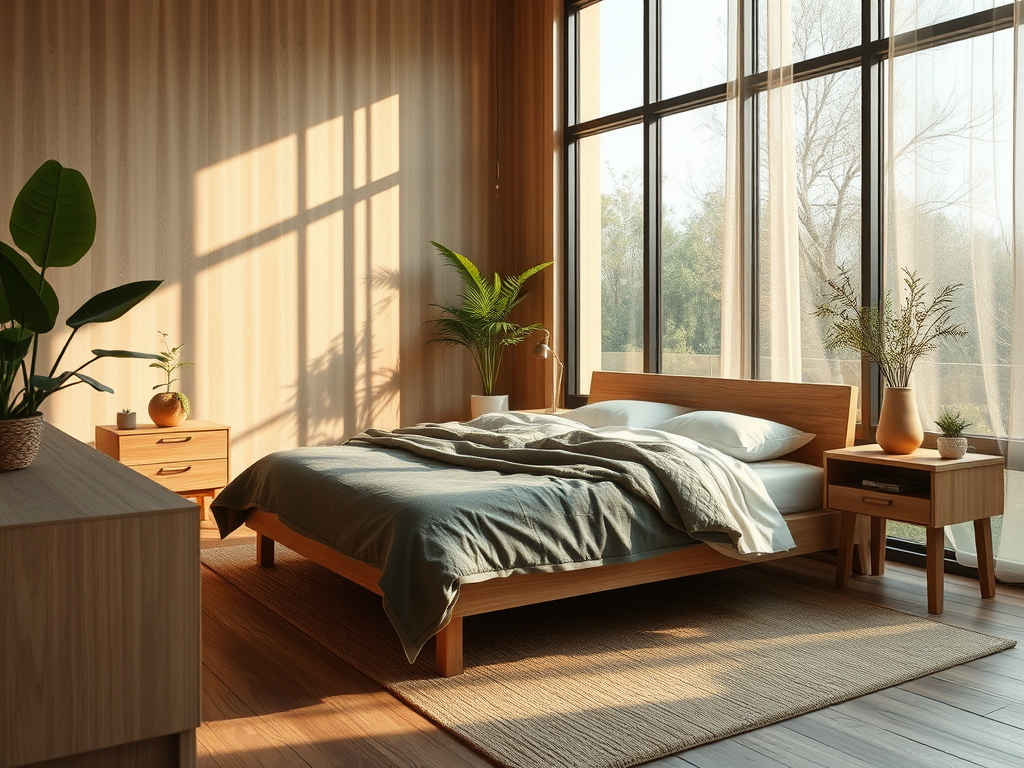
Most people spend at least one-third of their lives in the bedroom. It is where we sleep, restore, dream, and often decompress from a noisy, hyper-connected world. Yet when we talk about sustainability, the focus is usually on solar panels, electric cars, or energy-efficient kitchens—while the bedroom, paradoxically the most intimate and health-critical space in the home, is often an afterthought.
A sustainable bedroom is not just about “eco décor” or buying a few green products. It is a system: a carefully designed micro-environment that balances health, ecology, and comfort. It reduces environmental impact across the lifecycle of materials, lowers operational energy use, improves indoor air quality (IAQ), supports circadian rhythms, and promotes psychological well-being. Given that people spend around 90% of their time indoors, and that indoor concentrations of some pollutants can be 2–5 times higher than outdoors, the quality of our bedroom environment directly affects health and quality of life.
This article explores the sustainable bedroom from historical roots to practical construction strategies and future trends. It is written for an informed, professional or academically inclined audience—designers, builders, engineers, health professionals, and thoughtful homeowners—who want to transform bedrooms into regenerative, low-impact, deeply restorative spaces.
We will cover:
- The historical context of bedroom design and how we moved away from—and are now returning to—healthier, more ecological approaches.
- The current relevance of sustainable bedrooms, including health and IAQ data, energy concerns, and design trends.
- Practical applications, with concrete materials, systems, layouts, and case examples.
- Future implications, including smart sensing, bio-based materials, and performance-driven design.
The aim is both conceptual and practical: to give you a clear understanding of why sustainable bedrooms matter, and a toolkit for how to build or renovate one—step by step.
1. Historical Context: From Vernacular Wisdom to Synthetic Modernity
1.1 Pre-Industrial Vernacular Bedrooms
In pre-industrial societies, bedrooms were rarely separate “rooms” in the modern sense, but sleeping zones woven into multi-functional spaces. Still, many vernacular traditions used principles we would now label “sustainable”:
- Natural materials: solid timber, stone, clay, wool, linen, straw, and plant fibers dominated construction and furnishings. These materials were typically low in synthetic chemicals, biodegradable, and locally sourced.
- Passive climate strategies: orientation, window placement, thick walls, and shutters managed temperature and ventilation long before mechanical systems existed.
- Simple furniture and minimalism by necessity: fewer objects, mostly handcrafted, and designed to last.
Although fire, smoke, and poor ventilation could be issues in some contexts, many traditional designs reflected a finely tuned response to local climate and resources, with a close relationship between shelter, ecology, and daily life.
1.2 Industrialization: The Age of Coal, Cotton, and Crowding
The Industrial Revolution transformed domestic life in several key ways:
- Mass production of textiles and furniture: Cotton, synthetic dyes, early chemical finishes, cheap furniture, and new mattresses flooded urban homes. Ornamented interiors, heavy drapes, and dense stuffing materials became more accessible but often trapped dust and moisture.
- Urban crowding and poor ventilation: Overcrowded tenements with minimal fresh air increased exposure to indoor pollutants and infectious diseases. Early public health reformers advocated for fresh air, sunlight, and cleanliness as critical to health.
- Fossil-fueled heating: Coal and later gas heaters brought combustion by-products into or near the sleeping environment, often with inadequate venting.
Paradoxically, the bedroom became more private and specialized as a room, but often less healthy, more polluted, and more dependent on non-renewable resources.
1.3 Modernism and Mechanization: Comfort by Machine
By the mid-20th century, bedroom design was shaped by:
- Central heating and later air conditioning
- Standardized building materials (gypsum board, plastic paints, synthetic carpets)
- Foam mattresses and petrochemical foams
- Aluminum blinds, vinyl flooring, and laminate furniture
Comfort was increasingly delivered through mechanical systems and industrial materials, not passive design. Paints, adhesives, composite wood products, and carpets began to introduce volatile organic compounds (VOCs) and other emissions into indoor air. Energy-efficient construction without adequate ventilation led to higher indoor concentrations of pollutants.
Simultaneously, the bedroom became a more technological space—electric lighting, radios, TVs, and later digital devices changed both sleep behavior and electromagnetic environments.
1.4 The Green Awakening: From Sick Buildings to Healthy Bedrooms
From the 1970s onward, several threads converged:
- Energy crises → drive to reduce building energy use.
- Sick building syndrome → recognition that poor IAQ, off-gassing materials, and low ventilation rates can cause headaches, fatigue, and respiratory symptoms.
- Environmental movement → interest in solar design, natural building, and life-cycle impacts.
- Public health and IAQ research → stronger links between IAQ and respiratory, cardiovascular, and cognitive outcomes.
Green building frameworks (LEED, BREEAM, DGNB, etc.) and later well-being-oriented standards (WELL, Fitwel) integrated indoor environmental quality, daylighting, acoustics, and material toxicity. Bedrooms emerged as critical zones within these frameworks because of the time spent sleeping and the vulnerability of occupants (children, elderly, people with chronic conditions).
Today, the sustainable bedroom represents an intersection of building science, materials science, health research, and environmental ethics.
2. Current Relevance: Health, Environment, and Lifestyle Trends
2.1 Health and Indoor Air Quality
According to the U.S. Environmental Protection Agency (EPA), Americans spend about 90% of their time indoors, where some pollutants can reach concentrations 2–5 times higher than outdoors. Bedrooms, being enclosed and often used with doors and windows shut, are particularly sensitive to:
- Emissions from mattresses, furniture, paints, sealants, and carpets
- Combustion by-products (if solid-fuel appliances or candles are present)
- Moisture, mold, and dust mites
- Outdoor pollutants that infiltrate through the building envelope
The WHO estimates that household air pollution—mainly from polluting fuels and inefficient stoves for cooking and heating—contributes to 2.9 million deaths per year globally, associated with cardiovascular disease, chronic obstructive pulmonary disease (COPD), lung cancer, and lower respiratory infections. While much of this burden comes from kitchens and multi-use spaces in low- and middle-income countries, the bedroom is often where exposure is longest and where vulnerable populations rest.
Research and policy bodies increasingly recognize that indoor environmental quality (temperature, humidity, noise, light, air quality) is central to a sustainable and healthy society. There is a rapidly growing literature on how materials, ventilation, and occupant behaviors interact to shape IAQ.
2.2 Energy, Carbon, and the Bedroom
A sustainable bedroom is also an energy and carbon system:
- Operational energy: space heating and cooling, lighting, plug loads (chargers, devices), and sometimes localized electric heaters. Bedrooms are often kept at comfortable temperatures for long hours, especially at night.
- Embodied carbon: the greenhouse gas emissions associated with producing floors, walls, windows, furniture, mattresses, textiles, and electronics.
Recent sustainability strategies in universities, cities, and private developments emphasize low-energy, low-carbon buildings that also improve IAQ and occupant well-being. High-performance envelopes, better glazing, and heat recovery ventilation all directly affect bedroom performance.
Critically, energy efficiency and IAQ must be balanced: tightly sealed envelopes improve energy performance but can worsen IAQ if not paired with adequate ventilation. A sustainable bedroom design deliberately integrates both.
2.3 Trends Driving Sustainable Bedrooms
Several converging trends underpin the growing interest in sustainable bedrooms:
- Wellness and mental health: Sleep quality, circadian alignment, and stress reduction are now mainstream health topics. Bedrooms are reframed as recovery spaces, not just aesthetic zones.
- Material transparency: More manufacturers disclose VOC content, formaldehyde emissions, and life-cycle impacts. Third-party labels (e.g., EU Ecolabel, Nordic Swan, low-emission certifications) guide healthier choices.
- Biophilic and regenerative design: Designers seek to restore connection with nature, using daylight, natural views, plants, and biogenic materials.
- Smart home technologies: Affordable sensors for CO₂, VOCs, humidity, and temperature, along with smart controls and automated shading, enable continuous optimization of bedroom environments.
- Post-pandemic air quality awareness: COVID-19 highlighted airborne transmission and the importance of ventilation and filtration, catalyzing research and innovation in air cleaners and IAQ strategies.
2.4 Key Challenges
Despite progress, several challenges remain:
- Cost and accessibility: High-quality natural materials and advanced ventilation systems can be expensive up-front.
- Greenwashing: Some “eco” products rely on marketing rather than substantive environmental performance.
- Complexity: Truly sustainable design requires system-level thinking—materials, structure, energy systems, and behavior—rather than isolated product swaps.
- Climate differences: Strategies that work in a Mediterranean or tropical climate may not translate directly to cold, high-latitude regions; winter ventilation, low sun angles, and long nights change the design calculus.
The next sections move from context to implementation: how to actually design and build a sustainable bedroom in practice.
3. Principles of a Sustainable Bedroom
Before delving into details, it is useful to define the core principles guiding decisions:
- Health First
- Prioritize non-toxic, low-emission materials and finishes.
- Ensure robust ventilation, moisture control, and thermal comfort.
- Protect circadian rhythms with appropriate light design.
- Energy & Carbon Responsibility
- Optimize envelope performance (insulation, airtightness, windows).
- Use efficient heating, cooling, and lighting strategies.
- Choose materials with low embodied carbon and long lifespans.
- Resource Circularity
- Prefer recyclable, reusable, or biodegradable materials.
- Design for disassembly (e.g., furniture that can be repaired, modular elements).
- Avoid composite products that are difficult to recycle.
- Biophilic & Psychological Support
- Integrate natural light, views, and materials that evoke calm and connection.
- Support acoustic comfort and privacy.
- Keep visual clutter low and layout intuitive.
- Contextual & Cultural Fit
- Adjust to local climate, building traditions, and codes.
- Use locally available materials and craftsmanship where possible.
These principles serve as a lens for every design decision—from the wall assembly to the type of bedside lamp.
4. Practical Applications: How to Build a Sustainable Bedroom
This section walks through a sustainable bedroom from the macro (site, orientation) level down to micro (textiles, electronics), with examples and case-like descriptions.
4.1 Location, Orientation, and Envelope
4.1.1 Orientation and Solar Gain
- Cool or temperate climates:
- Place bedrooms on the east or southeast where possible. Morning light supports circadian rhythms, gently waking occupants.
- Avoid large unshaded west-facing glazing, which can cause overheating in late afternoon and evening.
- Hot climates:
- Favor north-facing (in the northern hemisphere) or orientations shaded by overhangs or vegetation to reduce cooling loads.
Use external shading devices, shutters, or deep reveals rather than relying solely on internal blinds. External shading is significantly more effective for reducing heat gains while still allowing daylight.
4.1.2 Thermal Envelope and Insulation
Key strategies for a sustainable bedroom envelope:
- High-performance insulation in walls, roof, and if relevant, floor. Natural or recycled options include cellulose, wood fiber, cork, sheep wool, or recycled denim, as well as thoughtfully used mineral wool. When using foams, choose low-global-warming-potential blowing agents.
- Airtight but ventilated: Attend to air-sealing at joints, window interfaces, and penetrations. Use continuous air barriers. Combine with mechanical or hybrid ventilation (see below). This improves both comfort and energy performance and reduces infiltration of outdoor pollutants.
- Thermal bridge reduction: Address balcony slabs, steel members, or poorly insulated junctions that can cause cold spots, condensation, and mold risk.
4.1.3 Windows and Glazing
Windows serve multiple functions: daylight, view, ventilation, egress, and thermal performance.
- Use low-U-value glazing appropriate to the climate (double or triple glazing).
- Consider low-e coatings tuned for solar gain vs. rejection depending on orientation.
- Use frames with good thermal performance (wood, composite, or well-insulated aluminum systems).
Operationally, encourage night ventilation in summer (where secure and culturally acceptable) and airing habits (short, intensive window opening) to refresh air without large heat losses.
4.2 Ventilation and Indoor Air Quality
4.2.1 Why Ventilation is Central
Indoor pollutants arise from combustion, off-gassing, human respiration (CO₂), moisture, and outdoor infiltration. Without adequate ventilation, these build up. Poor IAQ is linked to:
- Eye, nose, and throat irritation
- Headaches, fatigue, and cognitive impacts
- Respiratory disease, heart disease, and cancer in association with specific pollutants like radon and fine particulates
The EPA notes that energy-efficient construction without sufficient mechanical ventilation can raise indoor pollutant levels, making ventilation design a core component of sustainable bedrooms.
4.2.2 Ventilation Strategies
- Natural Ventilation
- Operable windows placed to catch prevailing winds and enable cross-ventilation.
- Secure ventilation elements (tilt and turn windows, trickle vents) for night or when away.
- Limitations: climate-dependent, outdoor noise or pollution, security concerns.
- Mechanical Ventilation with Heat Recovery (MVHR/HRV)
- Central or room-based systems supply filtered fresh air and extract stale air while transferring heat between streams.
- Reduces heat loss, ensures predictable air exchange, and filters outdoor particulates and pollen.
- Particularly valuable in cold climates or high-pollution urban environments.
- Hybrid Systems
- Top-up mechanical ventilation plus natural ventilation for peak use times or favorable weather.
Design targets should follow local standards or best practice guidelines for air changes per hour (ACH) and CO₂ levels (often aiming for indoor CO₂ not exceeding roughly 800–1000 ppm during occupancy as a rough heuristic, depending on standard).
4.2.3 Filtration and Air Cleaning
Where outdoor pollution or specific indoor pollutants are concerns, filtration and advanced purification can help:
- High-efficiency particulate air (HEPA) filters: Capture fine particulates (PM₂․₅, PM₁₀) from outdoor air or indoor sources.
- Advanced systems: Research into MopFan-based multi-stage air purification systems combining HEPA-type filtration, photocatalytic oxidation, and bio-aerogel filters has demonstrated substantial reductions in VOCs and formaldehyde in controlled environments, suggesting a promising path for sustainable, scalable IAQ improvements.
- Caution with ozone-producing devices: Some “air cleaners” based on ionization or ozone generation can introduce secondary pollutants and should be used carefully if at all.
Filtration is not a substitute for source control (choosing low-emission materials) and robust ventilation, but a complement.
4.3 Materials and Finishes
4.3.1 General Criteria for Bedroom Materials
- Low VOC and low formaldehyde emissions: Seek products certified for low emissions. Composite wood products should meet strict formaldehyde standards.
- Natural or bio-based where appropriate: Solid wood, cork, linoleum, wool, cotton, hemp, flax, and natural rubber can reduce reliance on fossil-based plastics and foams.
- Durability and repairability: Long-lived materials lower life-cycle impacts.
- Moisture resilience: Avoid materials that trap moisture and foster mold.
A 2024 bibliometric analysis of building materials and IAQ shows growing research interest and evidence linking material choice to indoor pollutant levels, underlining the importance of specifying low-emission products in healthy building design.
4.3.2 Floors
- Solid wood flooring (from FSC or similar certified sources) with non-toxic oils or low-VOC finishes provides a warm, durable surface.
- Cork or linoleum: Renewable, resilient, and comfortable underfoot.
- Avoid wall-to-wall synthetic carpets where possible: carpets can accumulate dust, allergens, and sometimes emit VOCs, though they may in some cases be helpful for acoustics. If used, specify low-emission products and high-performance cleaning regimes.
Area rugs in wool or other natural fibers can soften acoustics and comfort without covering all surfaces.
4.3.3 Walls and Ceilings
- Use mineral or plant-based plasters, low-VOC paints, or natural finishes.
- Avoid unnecessary vinyl wall coverings or plastic-based decorative elements.
- Natural clay plasters can buffer humidity, improving comfort and reducing mold risk in some climates.
4.3.4 Furniture and Storage
- Solid wood furniture with natural finishes is generally preferable to low-cost particleboard with high formaldehyde content.
- Consider modular, repairable systems to extend life.
- Avoid heavy chemical treatments (e.g., some flame retardants) where safe alternatives and compliant products exist in your jurisdiction.
Closet interiors are easily overlooked: specifying low-emission materials and ensuring ventilation in wardrobes can reduce trapped VOCs and musty odors.
4.4 The Bed, Mattress, and Textiles
Because the bed is where you spend a third of your day, choices here have disproportionate impact.
4.4.1 Mattress
Key aspects:
- Core materials: Natural latex, pocket springs with natural padding (wool, cotton), or well-certified foams. Natural latex and wool can help regulate moisture and temperature.
- Cover fabrics: Organic cotton, hemp, or Tencel/lyocell covers can reduce pesticide use and synthetic fiber shedding.
- Chemical treatments: Be cautious of heavy flame retardant or antimicrobial treatments. Look for certifications that limit hazardous substances and assess compliance with fire safety codes using safer strategies (e.g., fabric selection and product design).
Avoid low-cost mattresses with unknown foam chemistry and strong odors, as they may emit significant VOCs, especially shortly after purchase.
4.4.2 Bedding and Textiles
- Sheets, duvet covers, and pillowcases: Choose breathable natural fibers (organic cotton, linen, hemp, bamboo-derived viscose/Tencel where sustainably produced).
- Duvets and pillows: Wool, down (ethically sourced), kapok, or high-quality synthetics with clear emission and allergy certifications.
- Curtains and blinds: Fabric curtains can improve acoustics; external shutters and well-designed blinds provide better thermal control. Again, specify low-emission textiles with durable, cleanable finishes.
Washing and maintenance also matter: choose textiles that can be laundered at appropriate temperatures without harsh chemicals.
4.5 Light, Color, and Circadian Design
4.5.1 Daylight
- Position windows to admit morning light, which helps synchronize circadian rhythms.
- Use light shelves, reflective surfaces, and pale finishes to distribute daylight deeper into the room without glare.
- Provide shading to prevent overheating and allow for darkness when needed (e.g., shift workers, high-latitude summers).
4.5.2 Artificial Lighting
A sustainable bedroom lighting strategy has three layers:
- Ambient lighting: soft, diffuse lighting for general use.
- Task lighting: reading lights with good glare control and adjustable direction.
- Accent or mood lighting: low-level, warm-toned light for relaxation.
To support circadian health:
- Prefer warm color temperatures (around 2700–3000 K) in the evening.
- Avoid high-intensity blue-enriched light late at night from both fixtures and screens.
- Consider tunable white lighting systems or simple dimmers to reduce intensity as bedtime approaches.
LED fixtures should be high efficacy, long-lived, and ideally repairable with replaceable drivers or modules.
4.6 Acoustics and Psychological Comfort
Noise pollution impairs sleep quality, increases stress, and can contribute to cardiovascular risks over time. Sustainable bedroom design manages noise through:
- Building envelope: improved window acoustic performance, airtightness, and mass layers.
- Interior materials: soft furnishings, curtains, rugs, and upholstered surfaces to reduce reverberation.
- Layout: placing bedrooms away from noisy streets, elevators, or mechanical rooms where possible.
Psychologically, sustainable bedrooms often lean towards intentional simplicity:
- Minimize visual clutter and excessive electronics.
- Use colors and materials that evoke calm and connection (e.g., wood, earth tones, subtle textures).
- Integrate a few meaningful objects rather than many disposable decorative items.
4.7 Smart Sensing and Controls
Modern sustainable bedrooms increasingly leverage sensing and automation:
- IAQ sensors: measure CO₂, VOCs, temperature, and humidity, informing occupants or automating windows and ventilation systems.
- Smart thermostats and radiator valves: allow precise control of bedroom temperatures, reducing energy waste.
- Automated blinds or shading: respond to solar position and temperature, balancing daylight access with heat gain.
The World Green Building Council highlights air quality monitoring as a powerful tool for understanding actual conditions in buildings and improving design and operation, including in residential settings.
The key is to ensure that smart systems support rather than overcomplicate life: defaults should be intuitive, local overrides easy, and data meaningful rather than overwhelming.
5. Case Examples: Sustainable Bedrooms in Practice
5.1 Passive House Apartment Bedroom in a Cold Climate
Context: A multi-family building in a cold, northern climate adopts Passive House principles. Bedrooms are compact, well-insulated spaces on the east façade.
Key features:
- Triple-glazed windows with low-e coatings and insulated frames.
- Continuous, airtight envelope with carefully detailed junctions.
- Central MVHR system delivering pre-warmed, filtered air to each bedroom.
- Natural materials: wood flooring, solid wood furniture, low-VOC paints.
- Natural latex mattress with wool topper, cotton and linen bedding.
- Tunable LED lighting with automated dimming routines toward night.
Impacts:
- Stable winter temperatures without drafts, low heating bills.
- Measurable low CO₂ levels overnight and reduced VOC concentrations relative to conventional apartments.
- Reported improvements in perceived sleep quality and absence of condensation or mold despite cold winters.
This scenario illustrates how performance-based envelope and ventilation strategies combine with simple material choices to create a sustainable bedroom with both energy and health benefits.
5.2 Adaptive Reuse: Converting a Historic Building Bedroom
Context: A historic masonry building is converted into apartments. Preservation rules limit façade changes.
Strategies:
- Interior insulation with vapor-open but well-hygrothermally modeled assemblies to avoid interstitial condensation.
- Secondary internal glazing to improve acoustic and thermal performance while keeping original windows.
- Use of lime plaster and breathable paints to maintain moisture buffering capacity.
- Hidden ducted ventilation delivering fresh air with heat recovery.
- Furniture designed for disassembly and built from reclaimed timbers.
This example emphasizes sustainability as a negotiation with heritage and context, not a one-size-fits-all recipe. A careful balance of traditional materials and modern building science delivers a healthy, efficient bedroom without erasing history.
5.3 A Low-Cost Sustainable Bedroom Retrofit
Context: An existing bedroom in a modest home, with limited budget but strong motivation to improve sustainability.
Interventions:
- Replace old high-VOC paint with certified low-VOC or mineral paint.
- Remove wall-to-wall synthetic carpet and install simple wood or laminate with area rugs chosen for low emissions.
- Add operable shading and seal window frames to reduce drafts.
- Introduce a portable HEPA filter and encourage regular window airing.
- Replace old foam mattress with a certified low-emission option and choose cotton bedding.
- Use LED bulbs and add a small bedside dimmer lamp for evening light.
Even without structural changes, incremental measures significantly improve air quality, comfort, and energy performance.
6. Future Implications: Where Sustainable Bedroom Design is Heading
6.1 Advanced IAQ Technologies and Integrated Systems
Research into advanced air purification technologies, such as systems combining HEPA filtration, photocatalytic oxidation, and bio-aerogels, shows promising results in reducing VOCs and particulate matter while aiming to minimize secondary pollutants. As these technologies become more efficient, robust, and affordable, we can expect:
- Plug-and-play bedroom-scale devices with verified performance.
- Integration into building-wide systems controlled by AI-based optimization, balancing ventilation, filtration, and energy use in real time.
However, designers will need to remain critical: some advanced technologies may introduce new risks (e.g., byproducts, ozone) if poorly designed or operated.
6.2 Data-Driven Design and Performance Feedback
Continuous IAQ and environmental monitoring in buildings is generating large datasets. Paired with building performance modeling and machine learning, this data can:
- Reveal which materials, layouts, and operational patterns lead to the healthiest bedroom environments.
- Support “evidence-based” bedroom design, where decisions are backed by real-world performance metrics, not just manufacturer claims.
- Enable personalized environmental control tuned to individual comfort and health needs.
In academic and institutional projects, early examples (such as universities tracking IAQ as part of sustainability programs) point towards a future where bedroom environments are not black boxes but measurable, optimizable systems.
6.3 Bio-Based and Circular Materials
The push for embodied carbon reduction and circular economies will likely accelerate adoption of:
- Engineered mass timber (e.g., CLT) and other structurally capable bio-based products, with associated research on their indoor environmental impacts.
- Bio-based insulation (hempcrete, straw panels, mycelium-based materials) and interior finishes that sequester carbon.
- Modular furniture systems designed for disassembly, reuse, and remanufacturing.
Research is also deepening our understanding of how building materials affect IAQ and health, driving development of materials that are not only low-emission but actively beneficial (humidity buffering, pollutant sorption, etc.).
6.4 Regulatory and Market Shifts
As evidence accumulates linking IAQ and health outcomes, regulators and certification schemes are tightening requirements:
- Stricter limits on formaldehyde and VOC emissions from building products.
- Greater emphasis on balanced energy–IAQ approaches in building codes and guidance, avoiding the energy-efficiency–IAQ trade-offs of the past.
- Integration of bedroom-scale health metrics (e.g., nighttime CO₂ levels, noise levels) into green building and wellness certification frameworks.
Consumers increasingly demand transparent, verifiable sustainability claims, pushing manufacturers and developers toward genuine performance rather than cosmetic branding.
6.5 Holistic Health and Neuroarchitecture
Emerging fields such as neuroarchitecture study how built environments affect brain function, emotion, and behavior. Applied to bedrooms, this could mean:
- More precise understanding of how color, form, light patterns, and material texture influence relaxation, anxiety, and sleep.
- Design guidelines that intentionally sculpt sensorial environments for recovery—merging science with deep aesthetics.
The sustainable bedroom of the future may be conceived less as a room and more as a precision-crafted ecosystem for human regeneration, tuned both ecologically and neurologically.
7. Step-by-Step Guide: Building Your Own Sustainable Bedroom
To translate theory into action, here is a concise roadmap. It can be applied to new construction or renovation projects, scaled up or down depending on budget and constraints.
Step 1: Define Objectives and Constraints
- Health priorities (e.g., asthma, allergies, chemical sensitivity, sleep disorders).
- Climate and building context (apartment vs. detached house, historic vs. new build).
- Budget and time frame.
- Regulatory requirements and any sustainability or wellness certifications targeted.
Step 2: Audit the Existing Space
- Assess current IAQ (if possible, monitor CO₂, temperature, humidity, VOCs for a few days).
- Identify obvious issues: condensation, mold, drafts, noise intrusion, glare, or poor blackout capabilities.
- Inventory materials: flooring, walls, furniture, mattress, bedding, and electronics.
Step 3: Prioritize Interventions
Rank potential interventions by impact vs. cost:
- Ventilation and IAQ (including air sealing and filtration).
- Mattress, bedding, and primary furniture materials.
- Lighting and shading.
- Flooring and finishes.
- Smart controls and monitoring.
Step 4: Specify Materials and Systems
- Use vetted low-emission products and consult material databases or eco-labels.
- Design or choose furniture for durability and reparability.
- Ensure ventilation solutions meet or exceed minimum recommended rates and consider filtration needs based on local outdoor pollution.
Step 5: Implement and Commission
- Execute construction or retrofit with attention to detail (e.g., airtightness around windows, correct installation of MVHR ducts).
- Flush out the space with increased ventilation after new material installation to reduce initial off-gassing.
- Verify system operation: check airflows, sensor calibration, and control logic.
Step 6: Monitor and Adjust
- Use simple CO₂ and humidity sensors to check nighttime air quality.
- Track comfort: temperature, light levels, noise, and perceived sleep quality.
- Adjust ventilation, shading, and setpoints seasonally.
Sustainability is not a one-time event but an ongoing tuning process, guided by evidence and lived experience.
Conclusion: The Bedroom as a Prototype for Sustainable Living
The sustainable bedroom is much more than a beautiful, “eco-friendly” space. It is a living laboratory of sustainable design, where the intimate scales of sleep, breath, and daily rituals intersect with the planetary scales of climate, resources, and public health.
Historically, we moved from vernacular, material-intuitive sleeping spaces to highly industrialized, mechanically conditioned bedrooms that often neglected IAQ and ecological impacts. Emerging evidence on indoor air quality, energy performance, and material emissions—combined with the urgency of climate change—has driven a renewed focus on bedrooms as critical sites for sustainability.
Today, designing or renovating a sustainable bedroom means:
- Balancing low energy use and high indoor environmental quality.
- Choosing materials that are safe for human bodies and the biosphere across their life cycles.
- Leveraging ventilation, filtration, and monitoring to manage pollutants in a systematic way.
- Integrating biophilic elements, good acoustics, and circadian-supportive lighting to nurture mental and physical health.
Looking ahead, we can expect smarter sensing, more sophisticated IAQ technologies, low-embodied-carbon materials, and data-driven design guidelines to transform the bedroom further, making it perhaps the most scientifically informed and regenerative room in the home.
For research and practice, several frontiers remain ripe for exploration:
- Longitudinal studies linking specific bedroom design features to measurable health and sleep outcomes.
- Comparative life-cycle assessments of common bedroom material assemblies and furniture systems.
- Evaluation of advanced air cleaning technologies in real residential settings, not only laboratories.
- Integration of neuroarchitecture, circadian science, and environmental psychology into mainstream bedroom design education and codes.
Ultimately, building a sustainable bedroom is both a technical and ethical act. It says: the place where we are most vulnerable, where we rest and dream, should not quietly erode our health or the health of the planet. Instead, it can become a model—small in footprint, profound in impact—for how regenerative, human-centered environments might shape the future of our homes and our world.
Share this:

Discover more from Jarlhalla Group
Subscribe to get the latest posts sent to your email.